

Explore the options below with your team. Select a tab to review each tactical insertion method, including timing, advantages, and disadvantages.
- Option 1
- Option 2
- Option 3
- Option 4
- Option 5
- Option 6
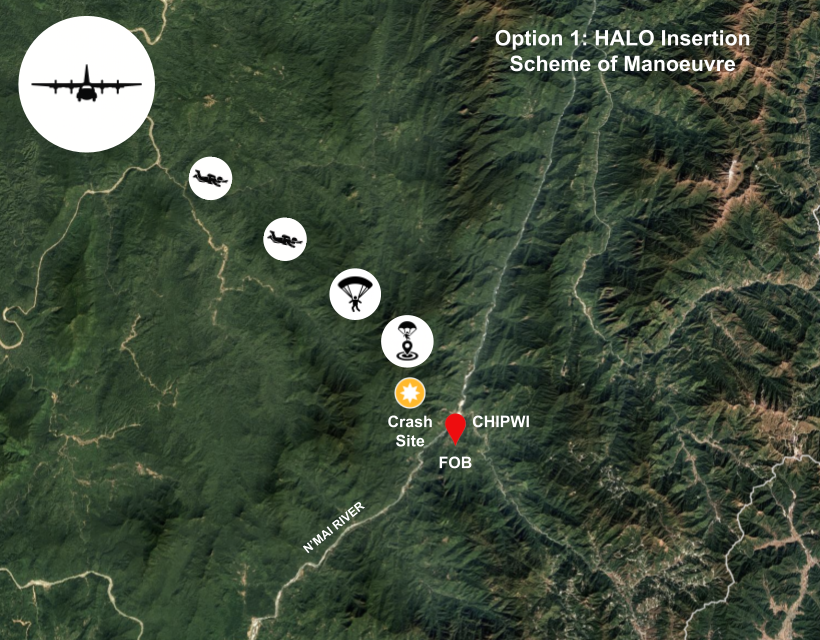
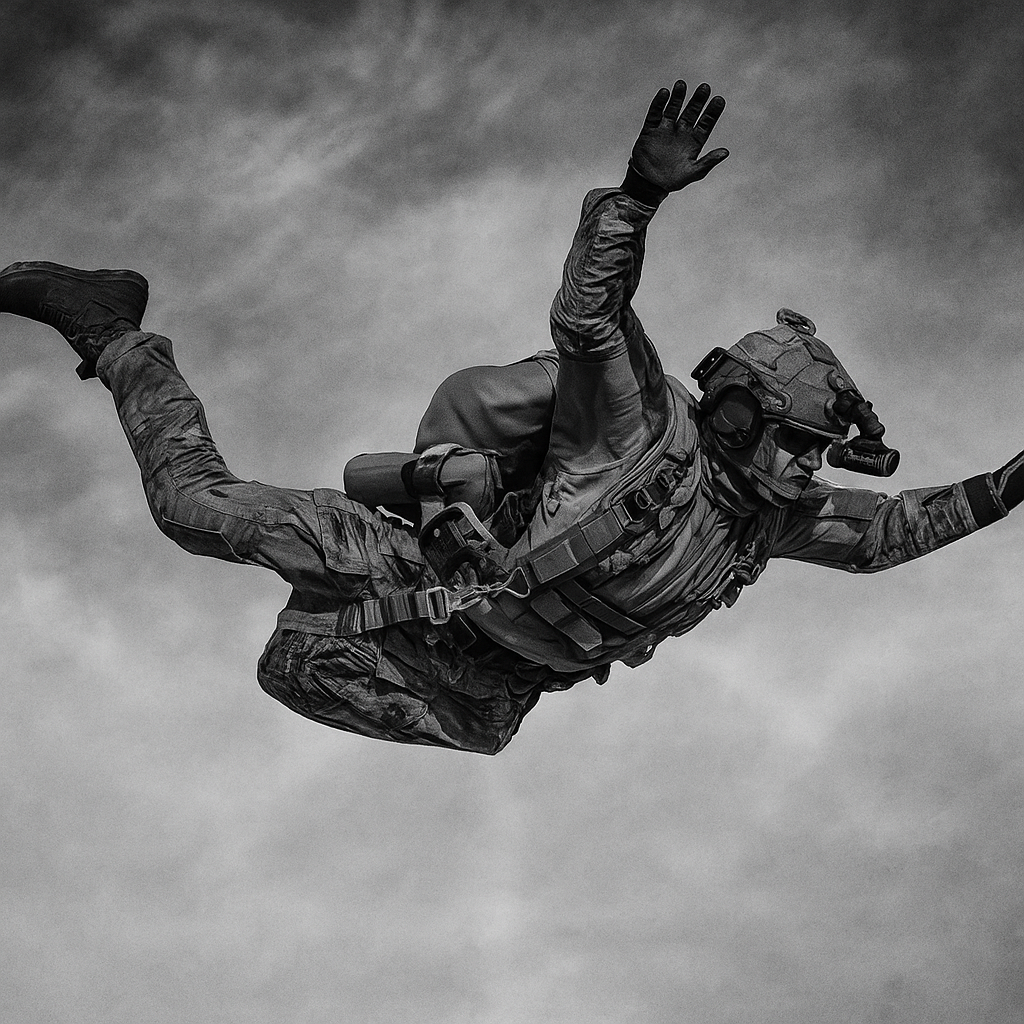
Option 1: High-Altitude, Low-Opening (HALO) Parachute Insertion
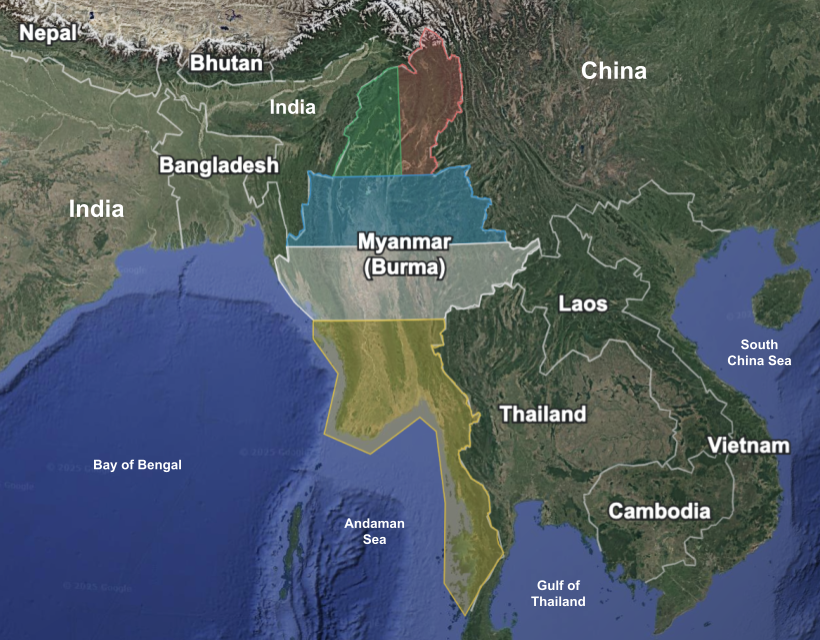
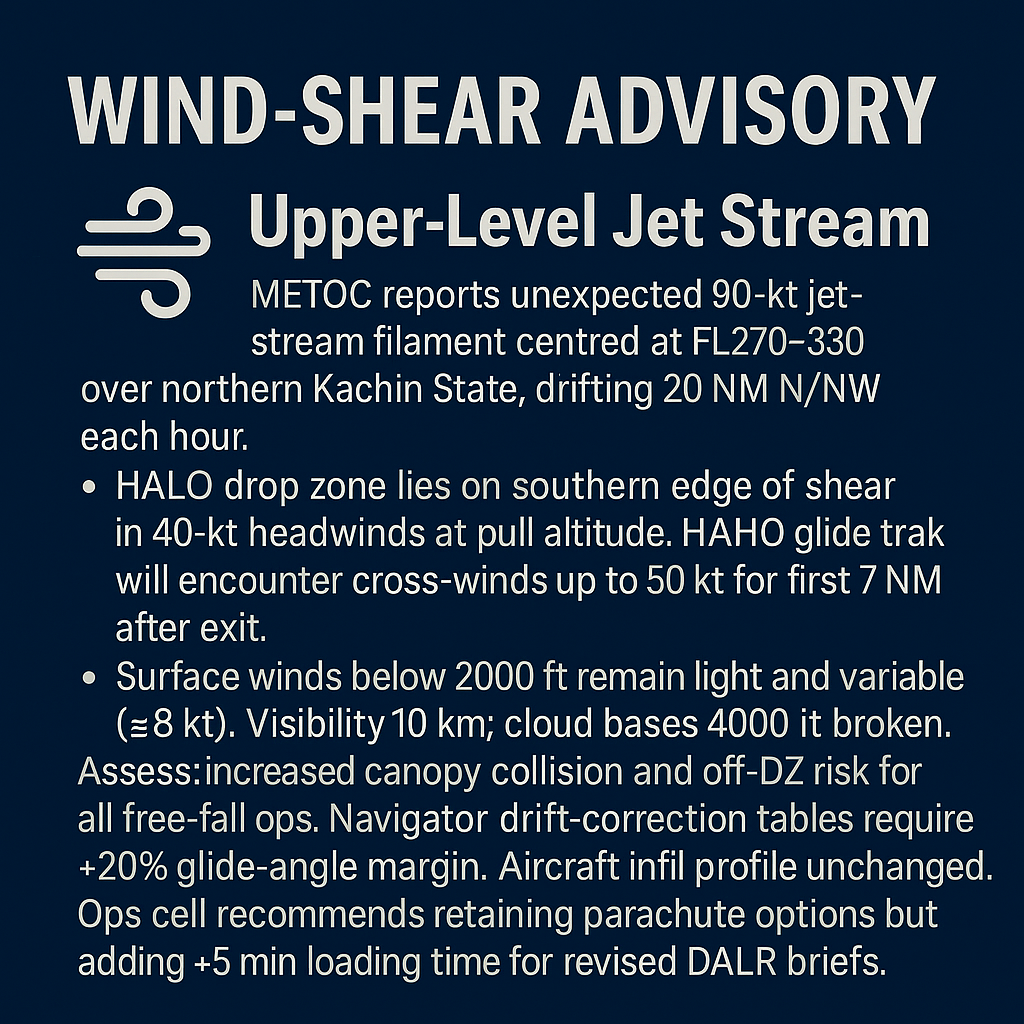
Board a military transport aircraft at JRH for a covert entry into Myanmar. Execute a HALO parachute deployment at 25,000 feet, exiting almost directly above the designated Drop Zone, approximately 3 km east of the crash site. After free falling for 2 minutes at roughly 180 km/h, deploy parachutes 2,500 feet above the ground and glide to the DZ. Upon landing, regroup and advance to the crash site.
Estimated time: 1 hour, 30 minutes
Advantages- Stealthy and rapid entry minimizes detection risk.
- Enables insertion into tightly controlled areas.
- Higher risk due to low-altitude parachute deployment.
- Winds and visibility can significantly affect success.
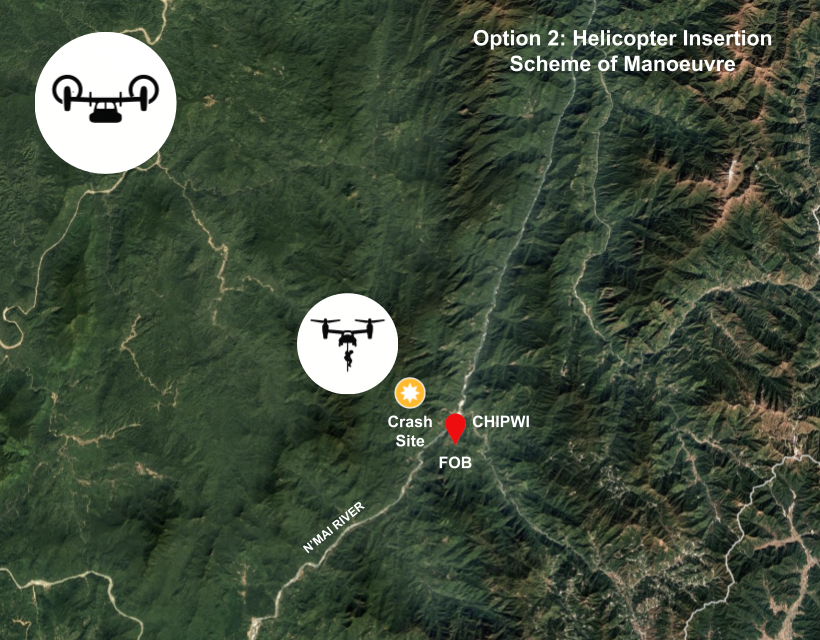
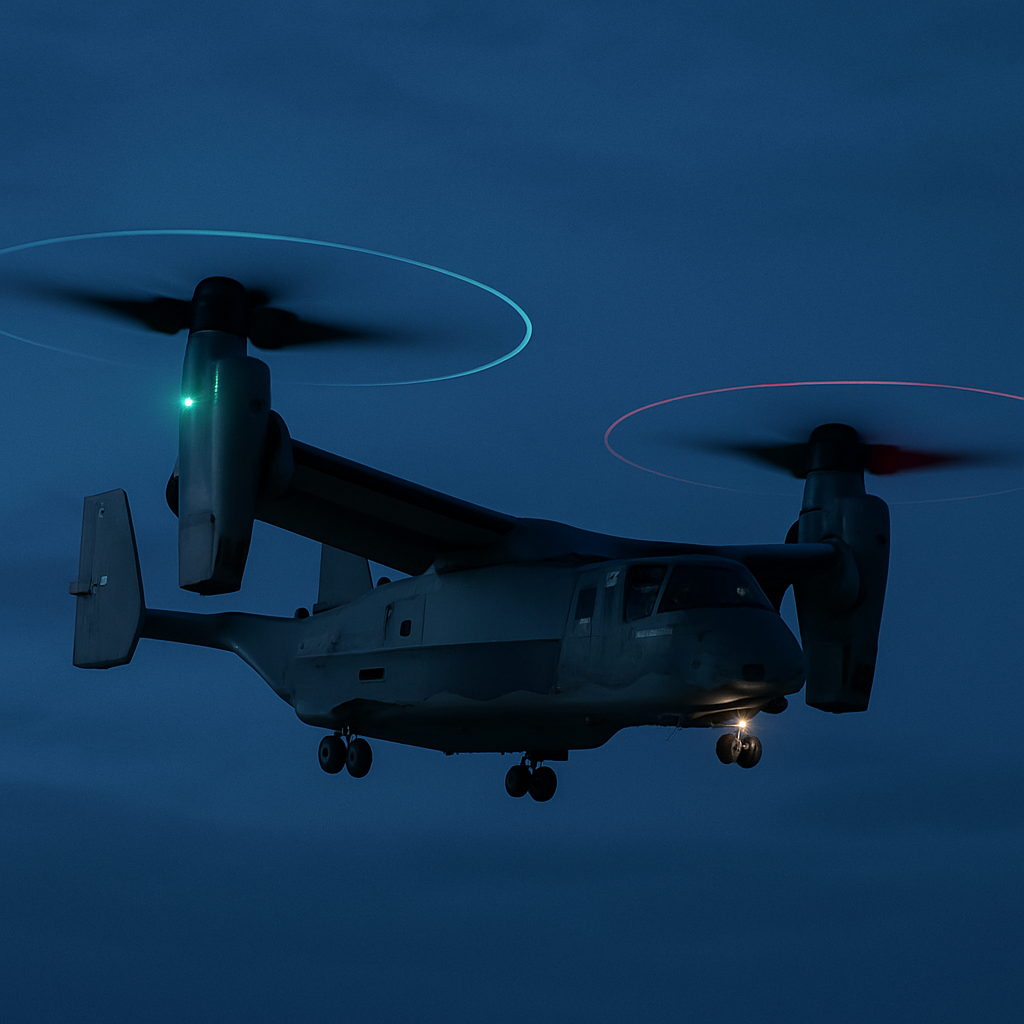
Option 2: Helicopter Insertion
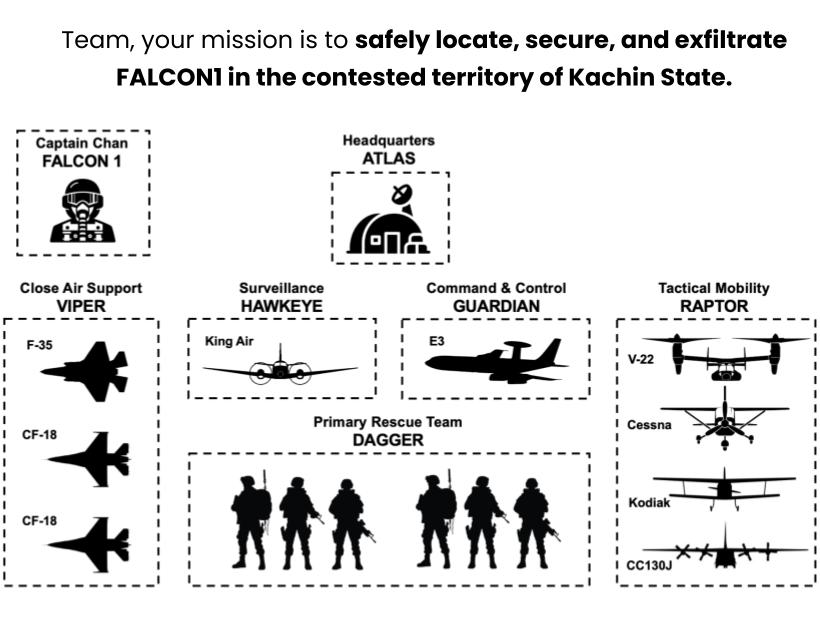
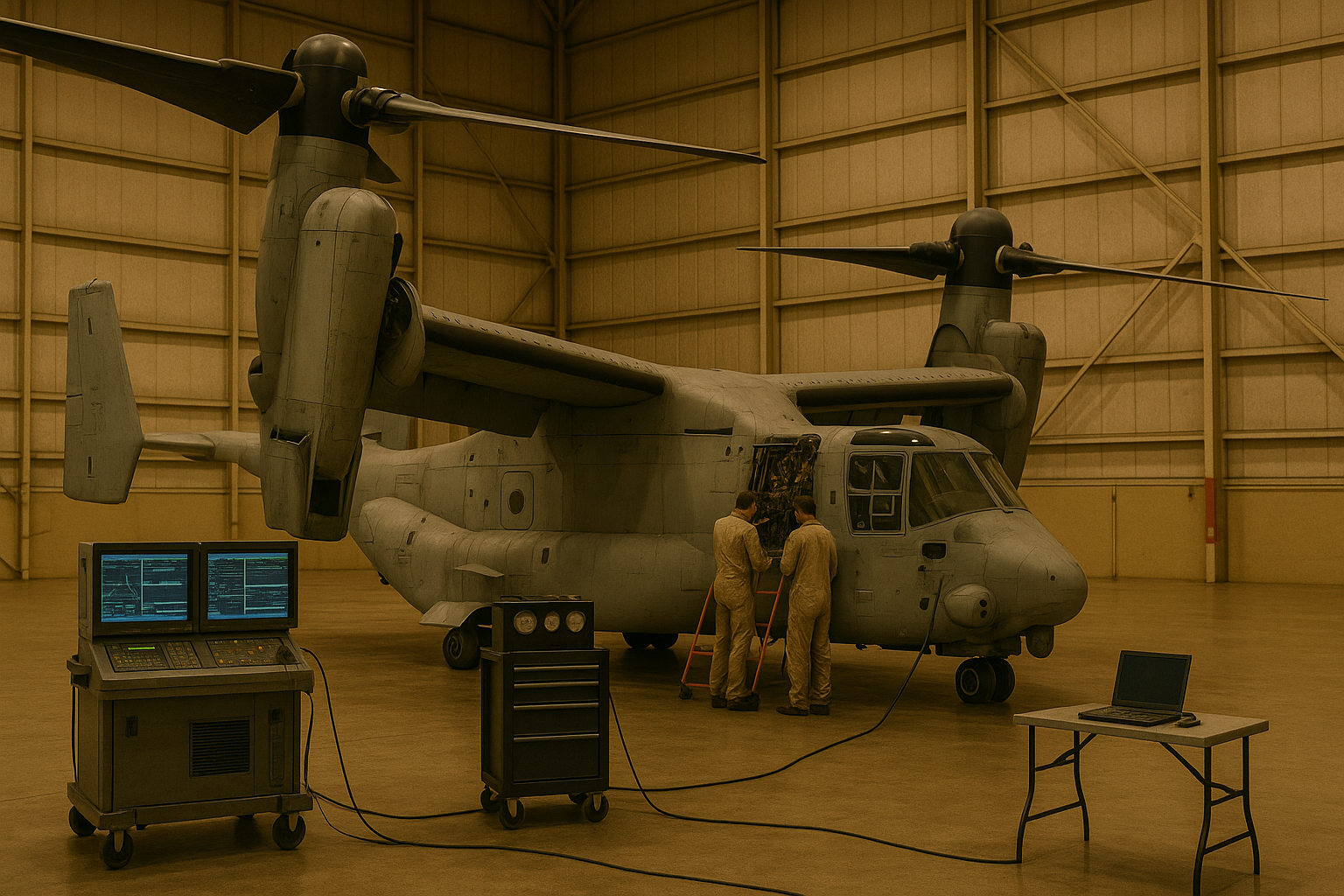
Board a V-22 Osprey, a tiltrotor aircraft capable of vertical take-off and landing, at JRH. Execute a swift, direct approach to the crash site using low-flying, radar-evading insertion techniques. Upon reaching the crash site, transition the V-22 to VTOL mode so the team can deploy using fast ropes.
Estimated time: 30 minutes
Advantages- Rapid deployment enhances mission responsiveness.
- Flexible in selecting landing zones to suit mission needs.
- Exposure to ground-based anti-aircraft defenses.
- Rotorcraft noise increases risk of compromise.
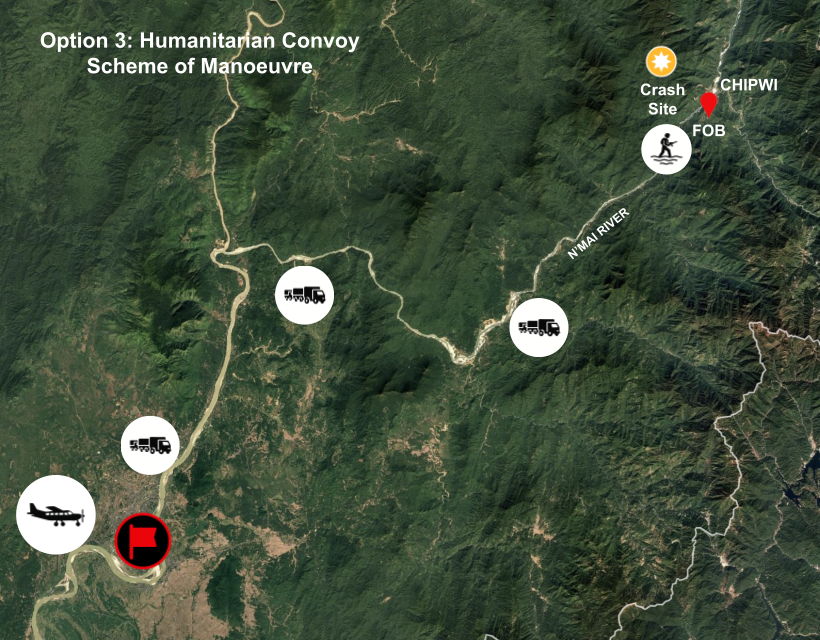
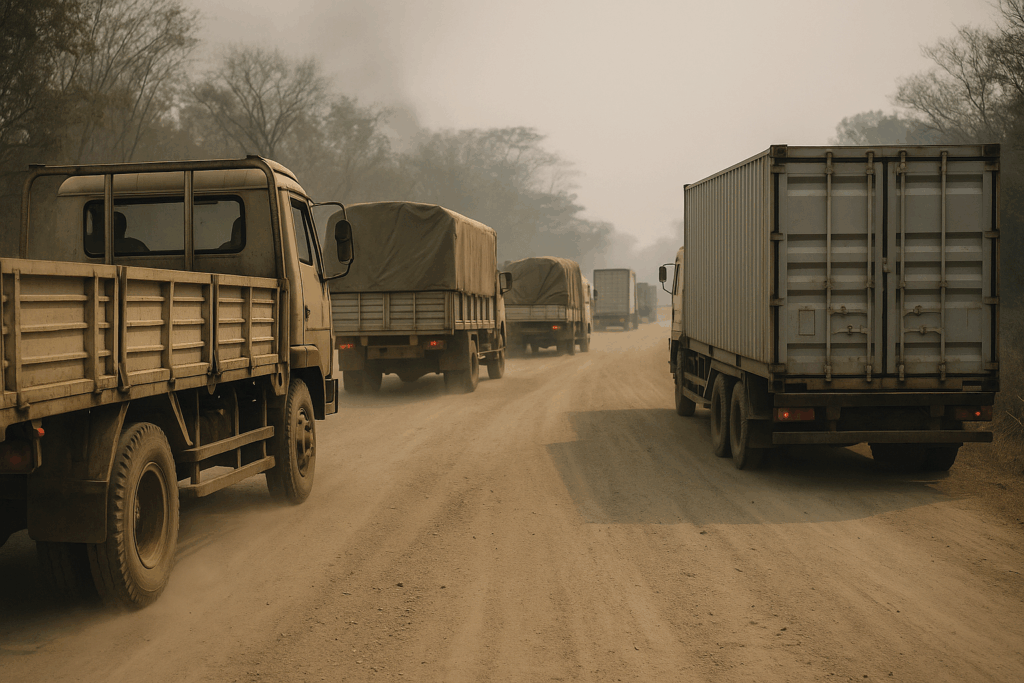
Option 3: Humanitarian Aid Infiltration
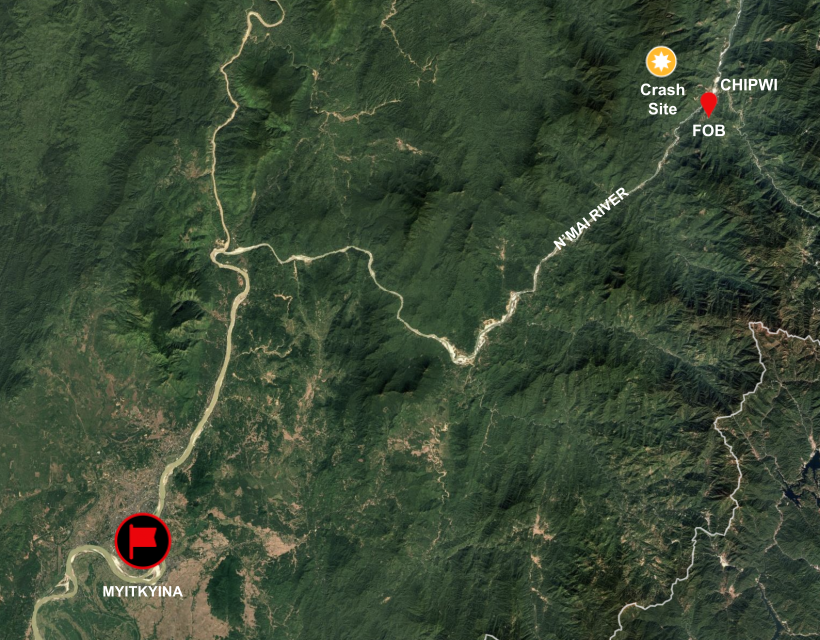
Depart from JRH aboard a Cessna 208 Caravan operating under a UN-sanctioned humanitarian aid mission. Fly to MYITKYINA Airport, integrate into a humanitarian convoy en route to CHIPWI, then exit the convoy south of CHIPWI, ford the N’Mai River, and advance to the crash site.
Estimated time: 5 hours, 30 minutes
Advantages- Authentic humanitarian cover story significantly reduces detection risk.
- Minimizes suspicion from local and opposing forces.
- Minimal strategic or tactical flexibility due to reliance on civilian disguise.
- Dependent on fixed itineraries and predetermined convoy routes.
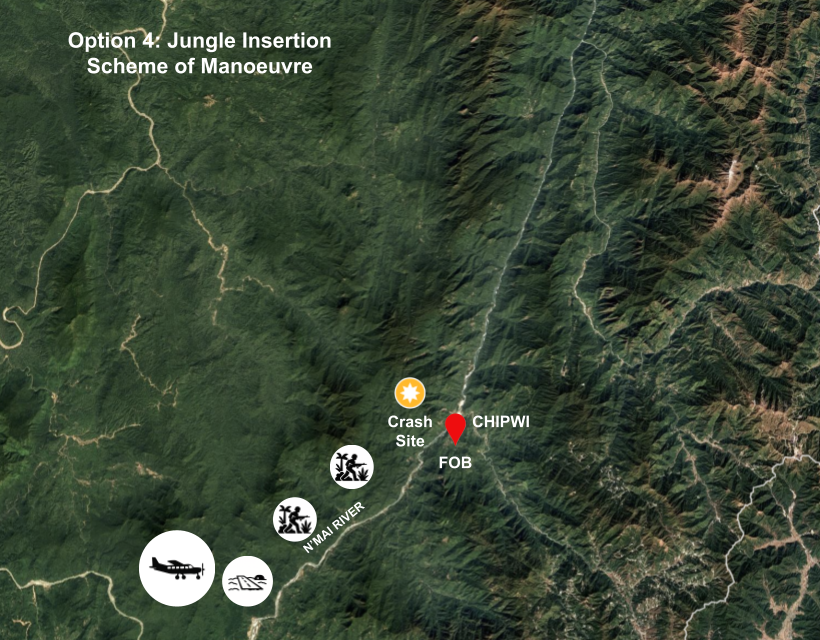
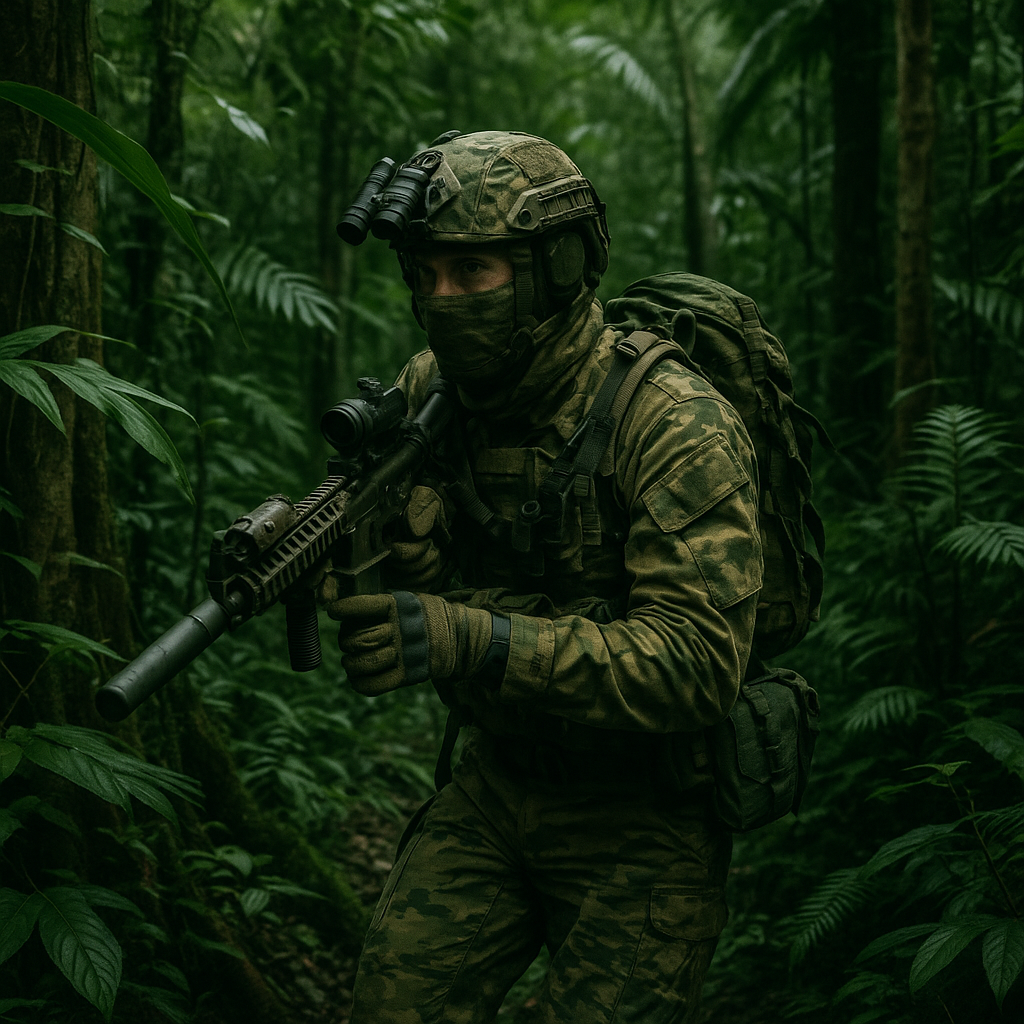
Option 4: Jungle Infiltration
Board a Quest Kodiak aircraft, selected for short take-off and landing capability, to execute a covert infiltration from JRH. Fly to an isolated airstrip approximately 15 km southwest of the crash site, then proceed on foot through dense jungle terrain toward the objective.
Estimated time: 7 hours, 15 minutes
Advantages- Stealthy insertion minimizes electronic detection.
- Uses natural terrain for concealment from enemy surveillance.
- Physically strenuous and requires high endurance.
- Navigation complexity increases risk of delays or errors.
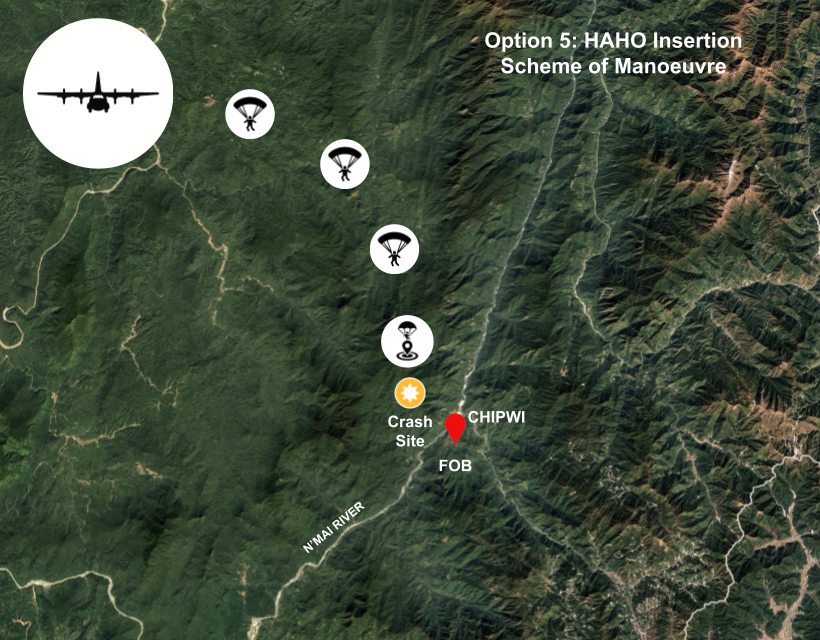
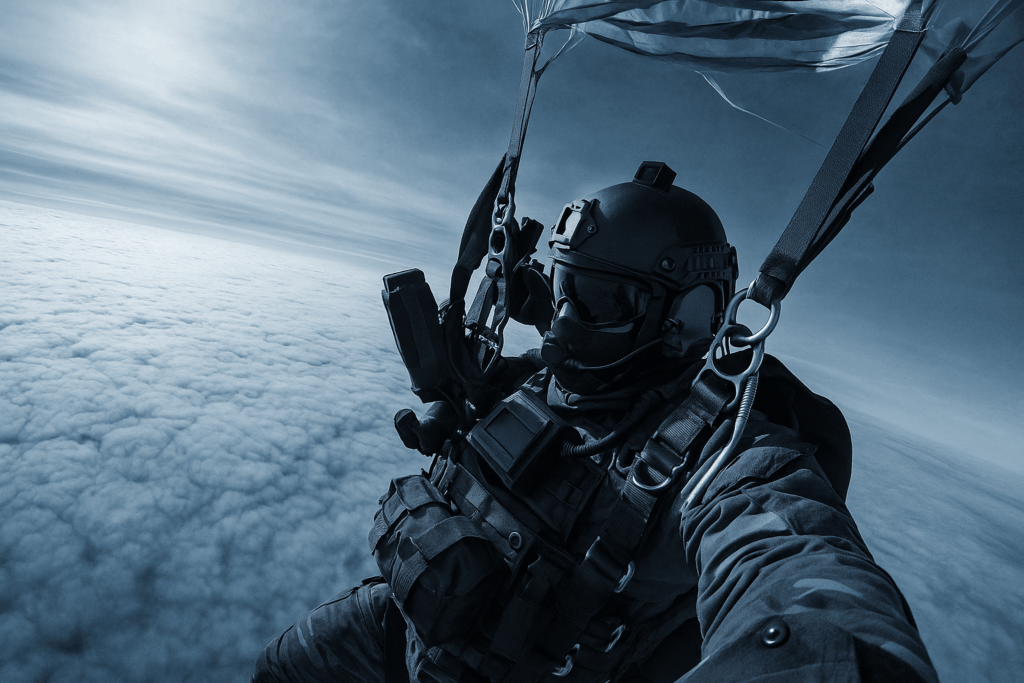
Option 5: High-Altitude, High-Opening (HAHO) Parachute Insertion
Board a CC-130J Hercules aircraft at JRH for a covert entry into Myanmar. Initiate a HAHO parachute deployment at 30,000 feet, approximately 4 km north of the DZ. Deploy parachutes shortly after exit, navigate a long-distance glide to the DZ, then regroup and proceed to the crash site.
Estimated time: 2 hours, 15 minutes
Advantages- Extended glide offers broader operational flexibility.
- Early deployment enhances stealth and minimizes radar detection.
- Longer exposure time in the air increases vulnerability.
- Requires complex navigation skills for effective glide path management.
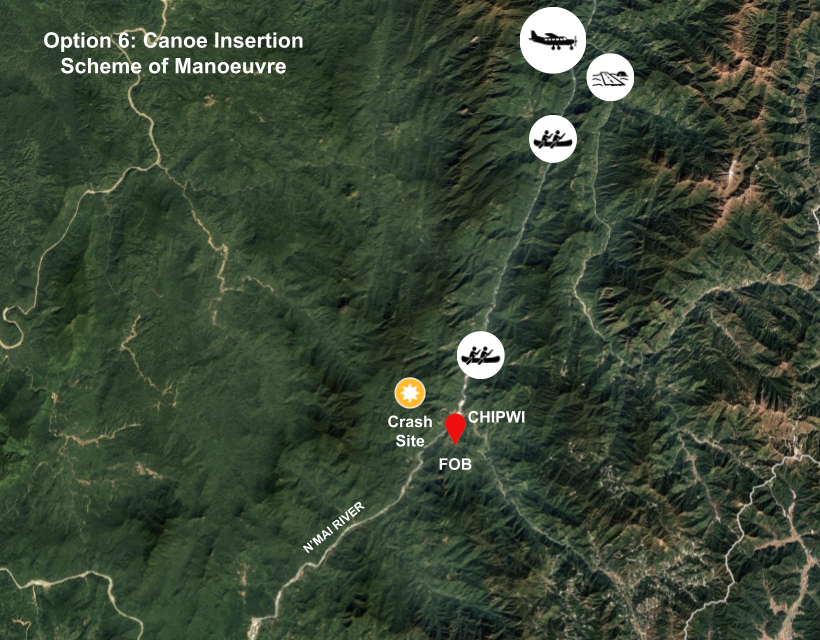
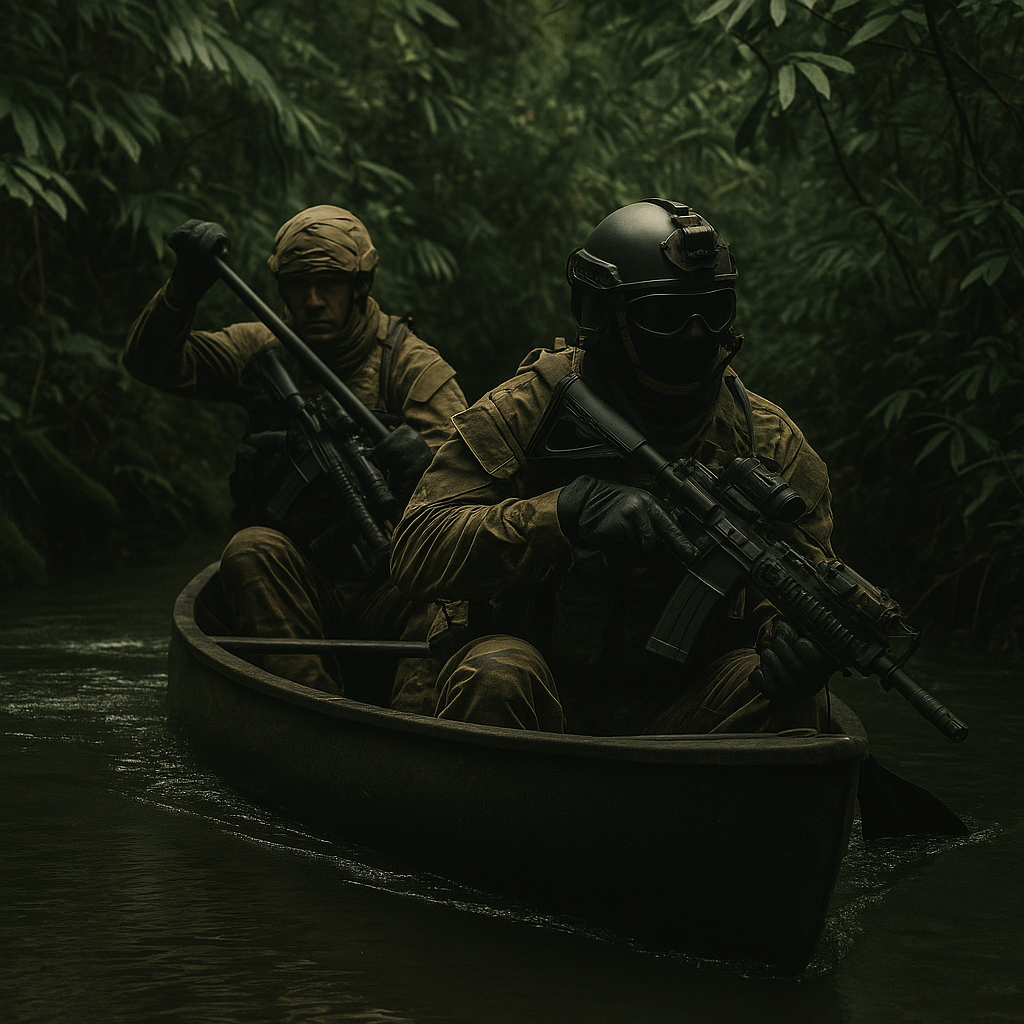
Option 6: Indigenous Canoe Insertion
Board a Quest Kodiak aircraft for a discreet flight to a remote airstrip approximately 50 km north of CHIPWI. After landing, move 3 km on foot to the N’Mai River, board prepositioned traditional canoes, travel downstream with local river traffic, then disembark and continue on foot to the objective.
Estimated time: 5 hours, 45 minutes
Advantages- Employs non-technological means, greatly reducing detectability.
- Provides flexible navigation options on the river.
- Limited capacity for transporting essential gear and supplies.
- River movement may expose the team to observation from the banks.
After reviewing the options above, your team must choose the best method for tactical insertion. Your team must wait until there are 2 mins or less remaining before selecting its decision.
Option 1: HALO Parachute Insertion
Conduct a high-altitude, low-opening parachute insertion close to the objective.
Click to Select Option 1
Option 2: Helicopter Insertion
Use a V-22 Osprey for the fastest insertion, accepting higher noise and detection risk.
Click to Select Option 2
Option 3: Humanitarian Aid Infiltration
Enter under humanitarian cover and move toward the crash site from a convoy route.
Click to Select Option 3
Option 4: Jungle Infiltration
Insert via austere airstrip and move overland through jungle terrain.
Click to Select Option 4
Option 5: HAHO Parachute Insertion
Conduct a high-altitude, high-opening parachute insertion with extended glide.
Click to Select Option 5
Option 6: Indigenous Canoe Insertion
Use a discreet airstrip, foot movement, and local river traffic to approach the objective.
Click to Select Option 6
